
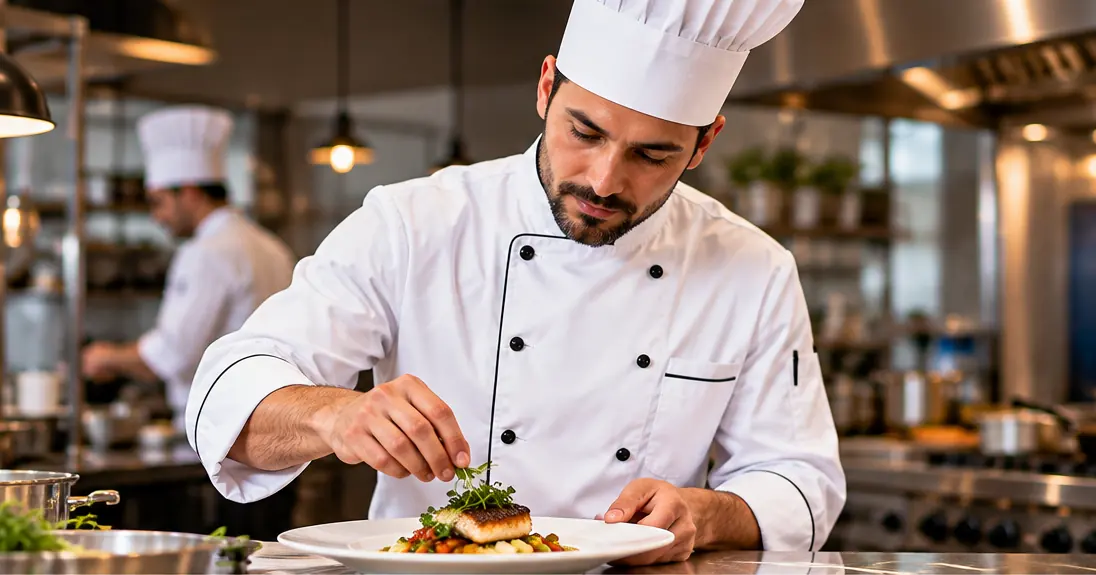
A chef coat is protective workwear first and a uniform second. The style you choose decides how cool your cooks stay beside a tandoor, how quickly a coat comes off after a spill, and how sharp your kitchen looks through an open pass.
This guide explains the main chef coat styles and jacket designs, what each detail does, and which style suits your kitchen, from hotel brigades to cafés and BBQ restaurants.
What are the main chef coat styles?
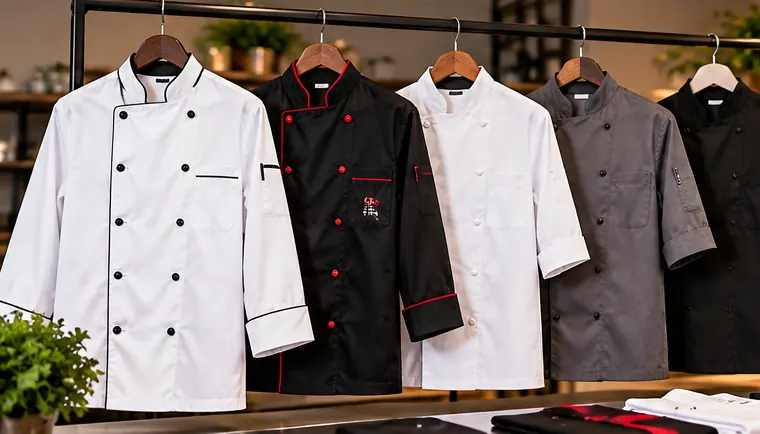
Most professional kitchens use six types of chef coats: classic double-breasted, single-breasted, short-sleeve, executive, mesh-vented, and casual chef shirt. They differ in fastening, sleeve length, weight, and how formal they look.
| Style | Fastening | Sleeves | Best for | Watch out for |
|---|---|---|---|---|
| Classic double-breasted | Cloth knot buttons or studs | Long | Hotels, fine dining, culinary schools | Warmest of all styles |
| Single-breasted | Buttons or press studs | Long or three-quarter | Modern restaurants, open kitchens | Can’t be re-buttoned to hide a stain |
| Short-sleeve | Press studs | Short | Tandoor, grill, BBQ and fast food | Less protection for the forearms |
| Executive | Double-breasted, contrast piping | Long | Head chefs, live cooking stations | Costs more than a standard coat |
| Mesh-vented | Press studs | Short or long | Very hot kitchens | Mesh panels need gentle washing |
| Chef shirt | Snap front | Short | Cafés, bakeries, food trucks | Looks less formal |
Classic double-breasted chef coat
The double-breasted chef coat is the traditional chef uniform. Two layers of fabric across the chest protect against heat and splashes, and the coat can be re-buttoned on the other side to hide a stain in the middle of service.
Single-breasted chef coat
A single row of buttons or studs gives a cleaner, modern line. It suits open kitchens where guests see the team, and it is slightly cooler than a double-breasted coat.
Short-sleeve chef coat
Short sleeves keep cooks cooler at the tandoor, grill, and fryer, where long sleeves soak up heat and get in the way. It is the most practical choice for desi, BBQ, and fast food kitchens.
Executive chef coat
The executive coat is longer, double-breasted, and often finished with contrast piping on the collar and cuffs. It marks out the head chef and looks good at live cooking stations in front of guests.
Mesh-vented chef coat
Mesh panels under the arms or across the back let heat escape. They make a real difference in kitchens with poor ventilation or long shifts over open flame.
Chef shirt
A lighter, snap-front shirt in a chef cut suits cafés, bakeries and food trucks. It looks relaxed and is easy to wash and wear every day.
Chef coat details and what they do
Every feature on a chef coat has a job. Knowing what each one does helps you choose features your cooks will actually use.
- Knotted cloth buttons survive hot washing and won’t melt or crack near heat.
- Press studs (snaps) let a cook pull the coat off fast if hot liquid spills on it.
- Mandarin collar protects the neck and keeps sweat off the face.
- Sleeve pocket holds a thermometer or pen where it can be reached with one hand.
- Turn-back cuffs keep sleeves clear of food and can be folded down for protection.
- Contrast piping shows rank or brand colour without changing the whole coat.
Which chef coat style suits your kitchen?
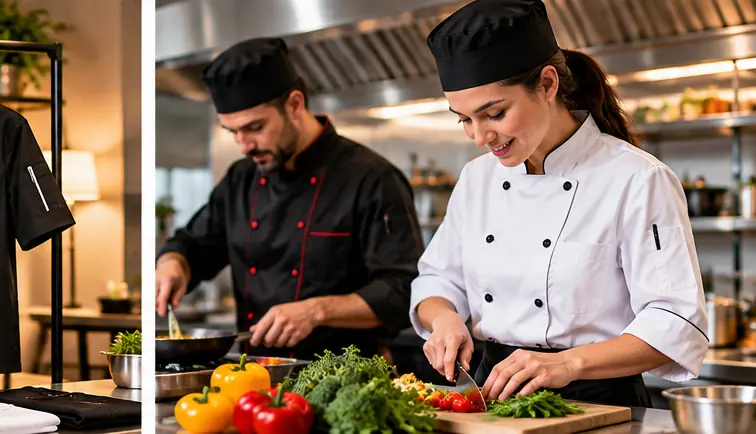
Match the coat to the heat of the kitchen and how visible the team is to guests.
| Kitchen type | Recommended style |
|---|---|
| Hotel brigade | Double-breasted for the team, executive for the head chef |
| Fine dining with an open kitchen | Single-breasted or executive in a clean colour |
| Desi, tandoor or BBQ | Short-sleeve with mesh vents |
| Fast food and burger kitchens | Short-sleeve or chef shirt |
| Bakery or café | Lightweight chef shirt or single-breasted coat |
| Banquets and catering | White double-breasted, which looks good in event photos |
White or black chef coats?
White is the traditional choice because it signals cleanliness and shows when a coat needs changing. Black and charcoal hide stains and suit modern open kitchens. Many kitchens mix the two: white for the head chef, black or grey for line cooks.
The best fabric for chef coats
Most chef coats are made in a poly-cotton twill of around 180–220 GSM, which balances breathability, strength, and easy washing. Our guide to the best fabric for chef coats compares blends and weights in detail.
Ordering chef coats for your kitchen
As chef coat manufacturers with our own factory in Rawalpindi, we make every style in this guide, with your logo and each chef’s name embroidered in-house.
- Tell us your kitchen type and the style you prefer on WhatsApp.
- Choose fabric and colour from swatches.
- Approve a sample coat before bulk production.
- Receive the order on a date confirmed in writing. Orders start from 30–50 sets.
Front-of-house staff can be dressed to match, with waiter uniforms in coordinated colours. If you’re comparing chef coat suppliers, read our guide on how to choose a uniform manufacturer.
Need chef coats for your team? Request a free bulk quote or WhatsApp +92 331 5050974 with your kitchen size and the style you like.
Frequently asked questions
What is the difference between a chef coat and a chef jacket?
The two names are mostly used for the same garment. Where kitchens separate them, a chef coat is the longer, double-breasted style and a chef jacket is the shorter, lighter, snap-front style.
Why are chef coats double-breasted?
The double layer of fabric protects the chest from heat and splashes, and the coat can be re-buttoned on the other side to hide a stain during service.
Which chef coat style is best for hot kitchens?
A short-sleeve chef coat with mesh vents and press studs suits tandoor, grill, and BBQ kitchens. Choose a breathable poly-cotton twill for long shifts.
Can you add our restaurant logo to chef coats?
Yes. Saad Enterprises embroiders your logo on the chest and can add each chef’s name. Orders start from 30–50 sets.


