
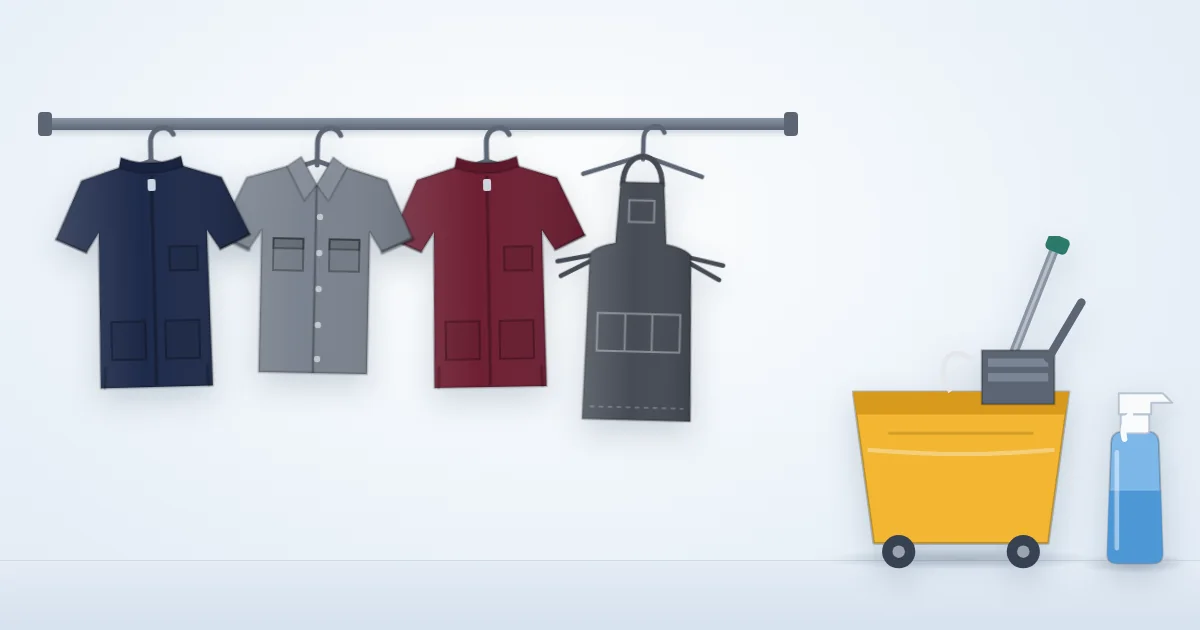
Cleaning staff wear out uniforms faster than almost anyone else on a payroll: bleach spots, wet knees, torn pockets and faded shirts within a few months. Good janitorial uniforms solve that with a simple kit: a tunic or work shirt, durable trousers, an apron for wet work, and closed, slip-resistant shoes, all in a dark, easy-wash poly-cotton fabric.
This guide covers what janitors, cleaners and sweepers should wear, which fabrics and colours last, what changes from a hospital to a hotel to an outdoor sweeping crew, the safety gear that goes with the uniform, and how to order in bulk. We make housekeeping and janitorial uniforms in Rawalpindi, so the advice comes from the orders we stitch for cleaning teams across the twin cities.
What do janitors and cleaning staff wear?
Janitors and cleaning staff usually wear a tunic or work shirt, durable trousers and an apron, with closed, slip-resistant shoes and gloves for chemicals. The exact kit depends on where they clean, but the core pieces stay the same.
| Item | Why cleaning staff need it | What to look for |
|---|---|---|
| Tunic or work shirt | Main uniform piece; carries the logo | Poly-cotton, side vents, 2–3 pockets, half or full sleeves |
| Polo shirt | Smarter look for offices, banks and malls | Pique knit that holds its collar after washing |
| Trousers | Bending and kneeling all shift | Elastic or half-elastic waist, reinforced knees, deep pockets |
| Apron or smock | Keeps splashes and dirt off the uniform | Bib apron with pockets; waterproof apron for washrooms |
| Coverall | Heavy cleaning, maintenance, outdoor work | Twill fabric, full-length zip or buttons, tool pockets |
| Jacket or jersey | Winter shifts and cold storage areas | Same colour as the uniform, logo on the chest |
| Cap or headscarf | Hair control and a neat look | Washable cotton twill, adjustable strap |
| Footwear and gloves | Wet floors and cleaning chemicals | Closed, slip-resistant soles; rubber or nitrile gloves |
Types of janitorial uniforms
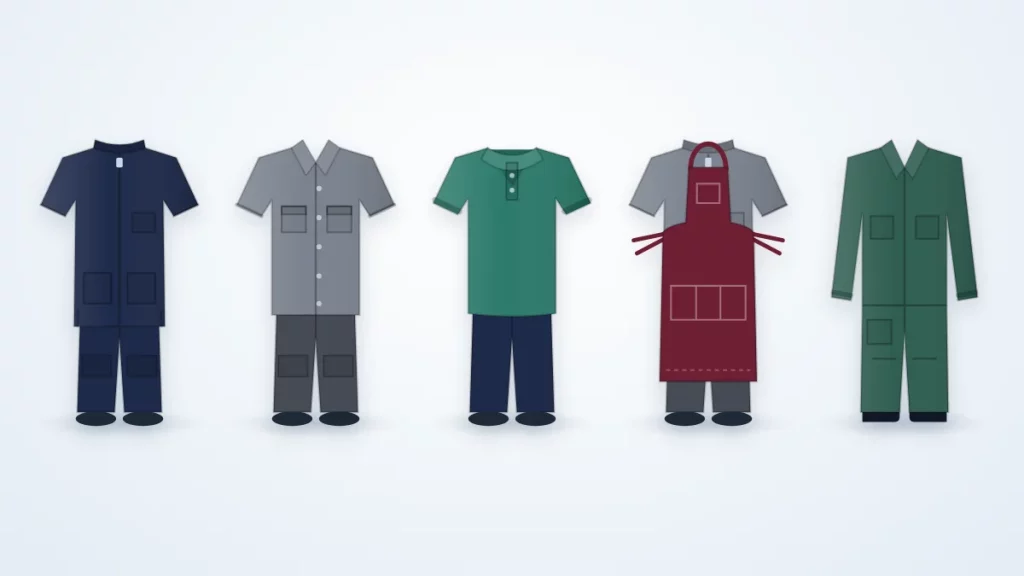
The main types of janitorial uniforms are tunics, work shirts and polos, trousers, aprons, coveralls and winter layers. Most cleaning teams need two or three of these, chosen by how dirty and physical the work gets.
Tunics
A tunic is the most common janitorial uniform top. It is a loose, hip-length top, usually zipped or buttoned at the front, with side vents so staff can bend and stretch freely. Tunics suit hospital, hotel and office cleaners because they look tidy and wash well. In Pakistan, many female cleaning staff prefer a longer, kameez-style tunic over trousers, so it helps to offer both lengths.
Work shirts and polo shirts
Work shirts with a collar and chest pockets suit general janitorial staff, caretakers and maintenance helpers. Polo shirts give a smarter look for front-facing cleaners in offices, banks and shopping malls, where staff work around customers all day. Both carry an embroidered logo well.
Trousers
Janitorial trousers need to survive kneeling, bending and constant washing. Look for an elastic or half-elastic waist, reinforced knees and deep side or cargo pockets for keys and cloths. Match the trouser colour to the top, or use a darker trouser that hides floor dirt.
Aprons and smocks
Aprons are the cheapest way to protect a uniform. A bib apron with front pockets keeps sprays, cloths and small tools at hand, while a waterproof PVC apron is better for washrooms and dishwashing areas. A smock, a short coat worn over clothes, is a good option for part-time or contract cleaners who don’t get a full uniform.
Coveralls
Coveralls suit heavy cleaning: warehouse floors, car parks, waste rooms and outdoor work. They cover the whole body and protect clothes underneath from grease and dirt. See our coverall uniforms for cotton and industrial options.
Jackets, jerseys and caps
Winter shifts in Rawalpindi and Islamabad run cold, especially for early-morning cleaners. A jacket or jersey in the uniform colour keeps the team looking uniform instead of mixing personal sweaters with work clothes. A cotton cap or headscarf completes the kit and keeps hair tidy in food and healthcare areas.
Best fabric and colours for janitorial uniforms
The best fabric for janitorial uniforms is a poly-cotton blend of about 150–220 GSM, in a dark or mid-tone colour such as navy, charcoal grey or maroon. That combination survives daily washing, dries fast and hides the dirt that cleaning work leaves behind.
Which fabric lasts longest?
| Fabric | Typical weight | Best for | Trade-off |
|---|---|---|---|
| Poly-cotton blend (65/35) | 150–220 GSM | Tunics, shirts and trousers for daily cleaning | Slightly less breathable than pure cotton |
| 100% cotton | 150–200 GSM | Hot, humid areas and staff who sweat heavily | Shrinks, fades and wrinkles faster |
| Cotton or poly-cotton twill | 200–280 GSM | Coveralls, heavy trousers, outdoor crews | Heavier and warmer in summer |
| PVC or coated fabric | Not measured in GSM | Waterproof aprons for washrooms and wet work | Not breathable, so worn over the uniform only |
GSM (grams per square metre) measures fabric weight. A heavier fabric lasts longer but feels hotter, which matters in a Rawalpindi summer. For coveralls specifically, our guide to cotton, twill or poly-cotton compares the options in more detail.
Two extras are worth asking for on janitorial fabric:
- Stain-release or soil-release finish, so dirt and grease wash out instead of setting into the weave.
- Good colourfastness, so the colour survives repeated washing. Suppliers can test this to ISO 105-C06, the standard for colour fastness to domestic and commercial laundering.
What colour should janitorial uniforms be?
Janitorial uniforms work best in dark or mid-tone colours, because cleaning staff spend the day around dust, water and chemicals.
- Navy and charcoal grey hide dirt and look professional in offices and hotels.
- Maroon and dark green hide stains well and stand out from other staff teams.
- Light blue or teal suit hospitals, where cleaners often wear the same tunic style as clinical support staff.
- Hi-vis yellow or orange is for outdoor crews near traffic; see the sweepers section below.
Avoid white and very pale colours for cleaning teams; every mark shows straight away.
One trade-off buyers often miss: staff who use bleach every day get pale spots on navy and black. For those teams, a mid-grey uniform, a printed tunic or a bib apron over the uniform hides bleach marks far better.
How to wash janitorial uniforms
- Wash after every shift, inside out, in warm water.
- Keep chlorine bleach off coloured uniforms; it fades the dye and weakens the fibres.
- Wash aprons and coveralls separately from tunics if they carry grease or chemicals.
- Line-dry in the shade where possible; strong sun fades dark colours.
Janitorial uniforms by workplace
Janitorial uniforms change with the workplace: hospitals need hygiene and a clear colour code, hotels need a polished look, and outdoor sweepers need high visibility. The table below gives a starting point for each.
| Workplace | Recommended uniform | Colours that work | Key point |
|---|---|---|---|
| Hospitals and clinics | Short-sleeve tunic and trousers | Light blue, teal, grey | Must look different from clinical staff |
| Hotels and guest houses | Tunic or dress for housekeeping; shirt and trousers for public areas | Navy, charcoal, brand colour | Guests see cleaners, so fit and finish matter |
| Offices, banks and malls | Polo shirt or tunic with trousers | Navy, charcoal, black | Smart enough to work around customers |
| Schools and universities | Tunic or work shirt with trousers, jersey in winter | Navy, maroon, grey | Modest, durable, easy to replace mid-year |
| Factories and warehouses | Work shirt and trousers, or a coverall | Grey, navy, dark green | Heavier twill for oil and dust |
| Outdoor sweepers | Shirt and trousers or kameez, under a hi-vis vest | Any dark base with fluorescent yellow or orange on top | Visibility near traffic comes first |
Hospitals and clinics in Punjab
Hospital cleaning staff in Punjab now need a standard uniform by rule. In October 2026, the Punjab Healthcare Commission directed all Category I and Category II-A healthcare establishments to make sanitation staff wear standard uniforms on duty, and gave facilities 30 days to comply. The same directive bars staff from wearing their uniforms outside hospital premises.
For buyers, that means a short-sleeve tunic and trousers for each cleaner, in a colour clearly different from nurses and doctors, and enough sets to change at work. Our guide to hospital scrub colour codes shows which colours are already taken on most wards.
Hotels and guest houses
Hotel housekeeping staff are seen by guests, so janitorial uniforms there need a sharper cut: a fitted tunic or housekeeping dress for room attendants, and a shirt and trousers for public-area cleaners. Matching the colour to the front office or restaurant team makes the whole hotel look consistent; see our hotel and restaurant uniforms for matching options.
Offices, banks and shopping malls
Office and mall cleaners work around customers and staff all day, so a polo shirt or tunic in navy or charcoal with the building’s or contractor’s logo works best. Facility management companies often order cleaner and guard uniforms together; our guide to security guard uniforms covers the guard side, so the two teams look distinct but consistent.
Outdoor sweepers: what should a sweeper wear in Pakistan?
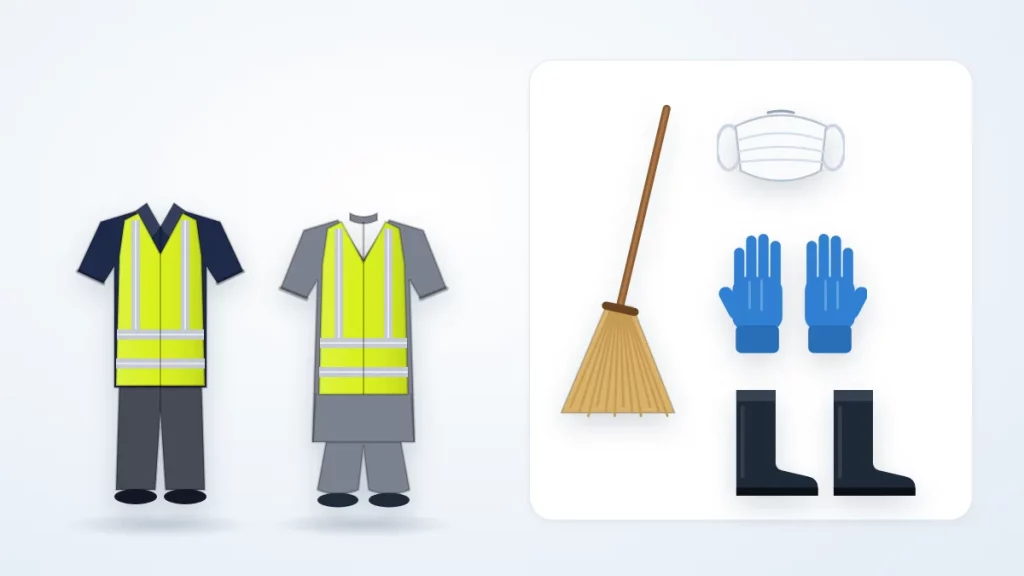
A sweeper working outdoors in Pakistan should wear a durable shirt and trousers (or kameez) under a high-visibility vest, with gloves, a dust mask and sturdy shoes. That matches the PPE checklist for sweeping in the Punjab Municipal Development Fund Company’s safety SOPs (June 2024), which lists gloves, dust masks, goggles, high-visibility clothing and sturdy footwear.
For road sweeping before sunrise or after dark, choose vests with retroreflective tape, not just a bright colour. The international standard for high-visibility clothing is ISO 20471, and a supplier should tell you whether its vests are tested to it.
Safety gear that goes with a janitorial uniform
A janitorial uniform is not protective equipment. It keeps staff tidy and identifiable, but cleaning chemicals, wet floors and outdoor traffic need separate safety gear (PPE) worn with the uniform.
| Safety item | When cleaning staff need it | What to choose |
|---|---|---|
| Gloves | Handling cleaning chemicals, waste and sharp objects | Nitrile or rubber; heavy-duty gloves for waste collection |
| Footwear | Wet, polished or oily floors | Closed shoes with slip-resistant soles; waterproof boots for washing areas |
| Dust mask | Sweeping, dusting and dry waste | Disposable or washable mask, changed regularly |
| Goggles | Spraying or mixing chemicals | Clear, splash-resistant goggles |
| Waterproof apron | Washrooms, dishwashing, mopping with chemicals | PVC apron worn over the uniform |
| Hi-vis vest | Roads, car parks, loading bays | Fluorescent vest with reflective tape |
Two rules keep this simple:
- Check the chemical label first. Each cleaning chemical’s label or safety data sheet states the protection it needs, so match gloves and goggles to the products your team actually uses.
- Treat drain and sewer cleaning as specialist work. Punjab’s PMDFC safety SOPs call for impermeable coveralls, chemical-resistant boots, face protection and respiratory protection for liquid-waste workers. An ordinary janitorial uniform is not enough for that job.
How to order janitorial uniforms in bulk
To order janitorial uniforms in bulk, count your cleaning staff by role, plan at least three sets per person, approve a fabric and logo sample, then order each colour in one batch. These six steps work for a single office or a facility company running several sites.
- List staff by role and site. Room attendants, public-area cleaners, washroom staff, outdoor sweepers and supervisors may each need a different kit.
- Plan three sets per person. One worn, one in the wash, one spare. Teams doing heavy or wet cleaning every day, or covering double shifts, usually need four or five.
- Take sizes from staff, not from a guess. Cleaning work means bending and stretching, so a size set to try on avoids tight shoulders and short tunics.
- Approve a sample with your logo. Check the fabric, colour, stitching and embroidery on one finished piece before bulk production starts.
- Order each colour in one batch. Two batches of “navy” can come out slightly different, so order the whole team together, with a few spare sets in the most common sizes for new joiners.
- Plan by season. Order summer uniforms before April and winter jackets or jerseys before November, so they arrive before the weather turns.
At Saad Enterprises, our team brings fabric swatches and sample garments to your office in Rawalpindi or Islamabad, and keeps your approved shades, logos and size charts on file so reorders match the first batch. Bulk orders usually start from 30–50 sets per design; our page on how bulk orders work in Rawalpindi and Islamabad explains quotes, samples and delivery.
How much do janitorial uniforms cost in Pakistan?
The price of janitorial uniforms in Pakistan depends on five things: the garment (a tunic costs less than a coverall), the fabric and GSM, the branding method (embroidery or print), the number of sets and any special finish such as stain-release Every quote should state the fabric, GSM, branding and per-piece price in writing.
How long does a bulk order take?
Production time for janitorial uniforms depends on the quantity, the fabric in stock and the branding. Allow extra time for sample approval and logo changes, and avoid ordering right before a peak season such as the start of winter.
Frequently asked questions
What do janitors wear?
Janitors usually wear a tunic or work shirt, durable trousers and an apron, with closed, slip-resistant shoes. Offices often choose polo shirts, factories use coveralls, and outdoor sweepers add a high-visibility vest. Gloves and other safety gear are worn with the uniform for chemical work.
What is the best colour for janitorial uniforms?
Navy, charcoal grey and maroon are the most practical colours for janitorial uniforms because they hide dirt and water marks. Hospitals often use light blue or teal for cleaning staff, and outdoor crews need fluorescent yellow or orange vests on top.
What fabric is best for cleaning staff uniforms?
A poly-cotton blend of about 150–220 GSM is best for most cleaning staff. It survives daily washing, dries quickly and holds its colour longer than pure cotton. Heavier twill suits coveralls and outdoor work.
What is the difference between janitorial and housekeeping uniforms?
Housekeeping uniforms are for room attendants in hotels and hospitals and usually look smarter. Janitorial uniforms cover general cleaning, washrooms and maintenance, so they are built tougher, in darker colours, often with aprons or coveralls. Many manufacturers make both from the same fabrics.
What should a sweeper wear in Pakistan?
An outdoor sweeper in Pakistan should wear a durable shirt and trousers or kameez under a high-visibility vest, with gloves, a dust mask and sturdy shoes. Punjab’s PMDFC safety SOPs (June 2024) list these items for sweeping work.
Do hospital cleaning staff in Punjab have to wear uniforms?
Yes. In October 2026, the Punjab Healthcare Commission directed Category I and II-A healthcare establishments to make sanitation staff wear standard uniforms on duty, with 30 days to comply. Staff may not wear these uniforms outside hospital premises.
How many uniforms does each cleaner need?
Plan at least three sets per cleaner: one worn, one in the wash and one spare. Staff doing heavy or wet cleaning every day, or covering double shifts, usually need four or five sets.
Can janitorial uniforms carry a company logo?
Yes. Embroidery on the chest is the most durable option for tunics, shirts and polos, while printing suits large text on the back, such as “Housekeeping” or a contractor’s name. Approve a logo sample before bulk production.


