
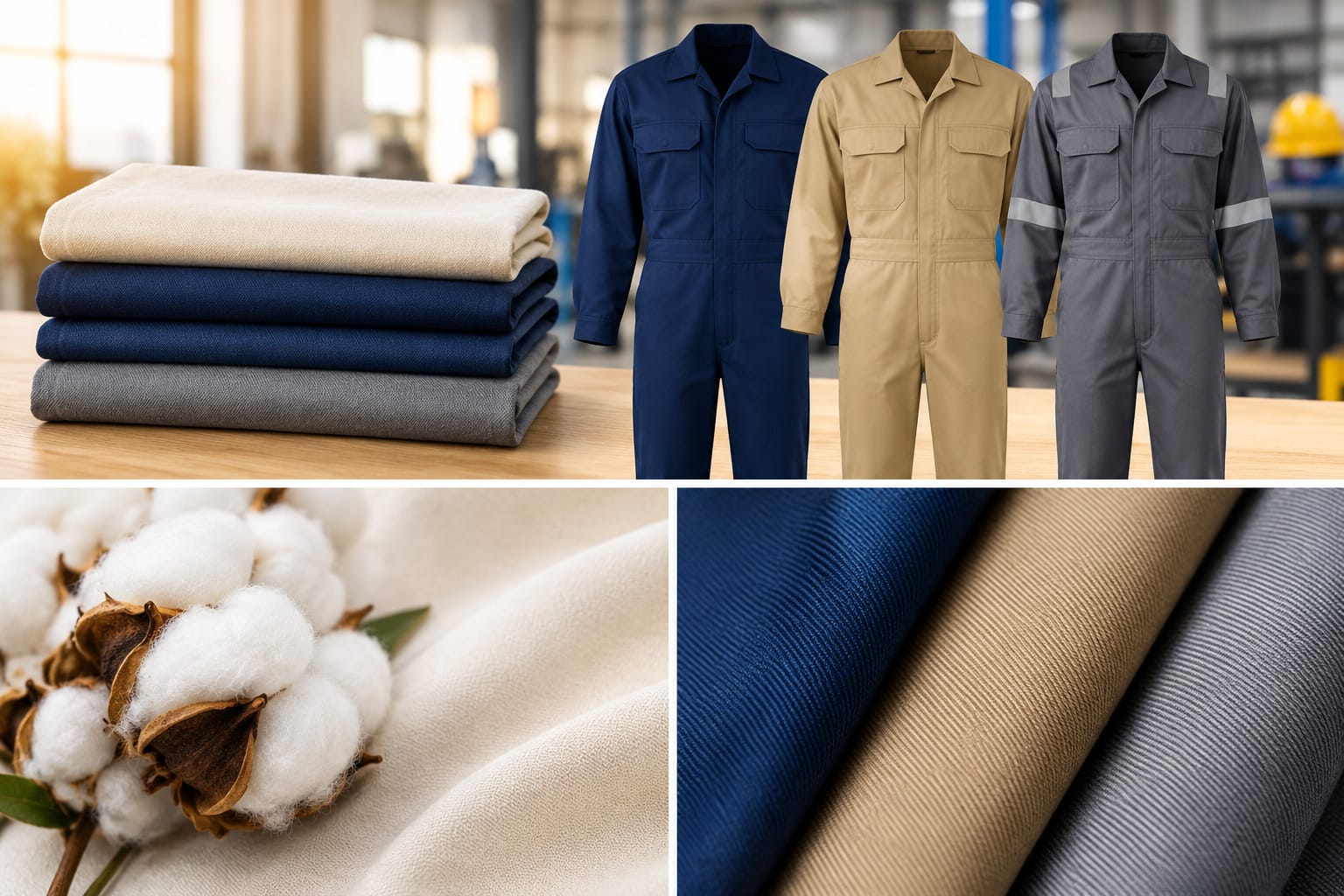
A coverall that is too hot gets unzipped and tied round the waist. One that tears at the crotch or fades after a month gets thrown away. Most of these problems come down to one choice made before the order: the fabric.
This guide compares the best fabric for coveralls used in Pakistani factories, workshops and sites: cotton drill, cotton twill, poly-cotton and heavy canvas. It explains which workwear fabric suits which job, what weight to choose, and which details matter as much as the cloth.
Short answer: for most factories and workshops, the best coverall fabric is a cotton-rich drill or twill of about 220–280 GSM. Choose 65/35 poly-cotton twill when coveralls are washed often or worn around oil and grease.
Best fabric for coveralls: the options compared
Each fabric trades comfort against strength and easy care in a different way.
| Fabric | Typical weight | Strengths | Weaknesses | Best for |
|---|---|---|---|---|
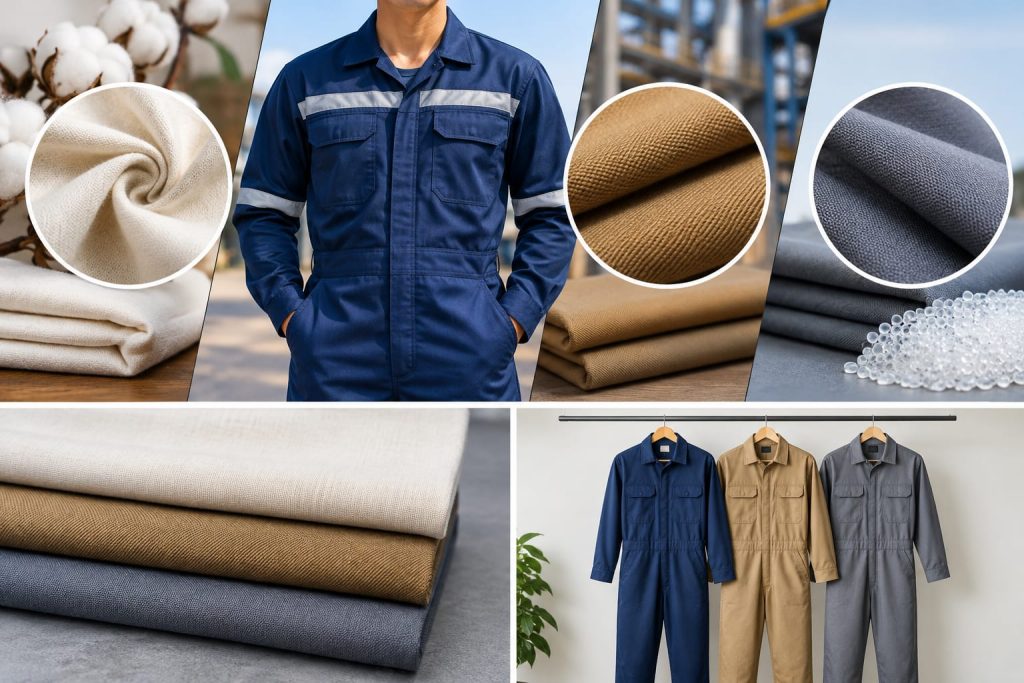
| 100% cotton drill | 220–280 GSM | Breathable, comfortable in heat, doesn’t melt near sparks | Shrinks unless pre-shrunk, fades faster | Workshops, maintenance, hot factory floors |
| Cotton twill | 220–280 GSM | Soft, strong, hides dirt | Slower to dry | General factory work |
| 65/35 poly-cotton twill | 200–250 GSM | Strong, holds colour, dries fast, little shrinkage | Warmer, melts near flame | Logistics, oily work, frequent washing |
| Heavy cotton canvas | 300+ GSM | Very tough and abrasion-resistant | Stiff and hot | Heavy industry, outdoor work |
These weights are typical ranges. We confirm the exact GSM on the swatch you approve.
What is the difference between drill and twill?
Drill is a heavy, tightly woven type of twill made for workwear. Regular cotton twill is a little softer and more flexible. Both have the diagonal weave that makes them stronger than plain-woven cloth, which is why drill and twill coveralls are the standard in most factories.
Cotton or poly-cotton: which is better for coveralls?
Cotton is better for heat and sparks, and poly-cotton is better for durability and easy care. Pick the fabric that suits the work environment, not just the price.
- Choose cotton coveralls for hot factory floors, workshops near grinding or sparks, and long summer shifts.
- Choose poly-cotton for oily, greasy work, frequent industrial washing, and when colour must stay bright.
- Choose certified flame-resistant fabric for welding, refineries, and any open-flame risk. Ordinary cotton is not flame-resistant; only fabric made to a standard such as ISO 11612 should be sold as fire-resistant.
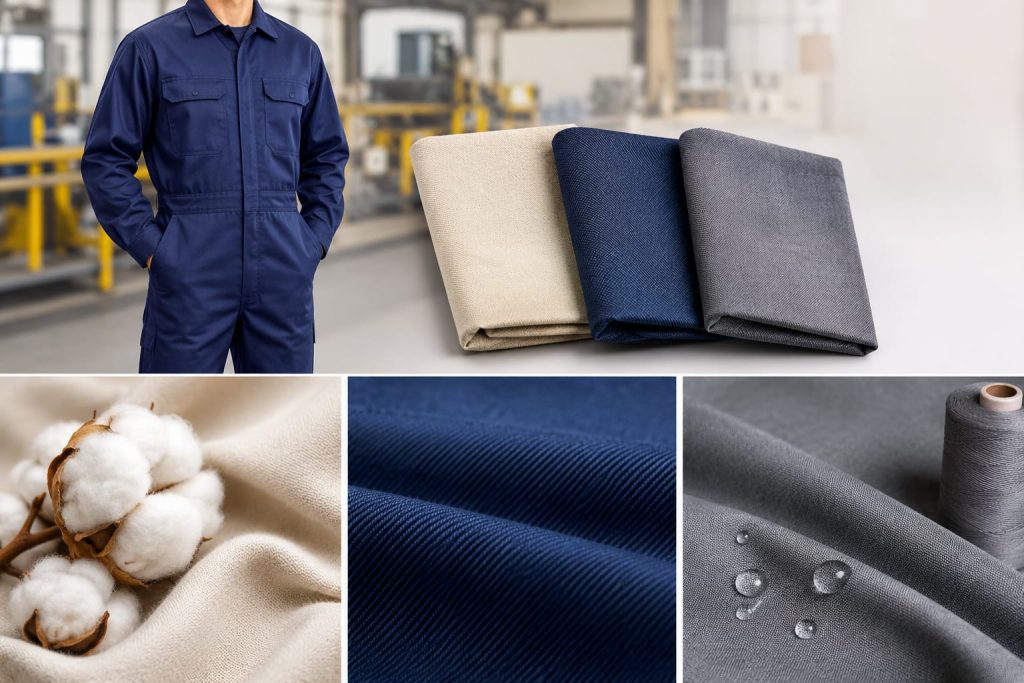
What GSM should a coverall be?
Most factory coveralls fall between 220 and 260 GSM. Go lighter for summer and lighter duty, and heavier for rough or outdoor work.
| Weight | GSM range | Use |
|---|---|---|
| Light | 180–220 | Summer shifts, packing and light assembly |
| Medium | 220–260 | General factory and maintenance work |
| Heavy | 260–320 | Heavy industry, outdoor and winter work |
Stitching and features matter as much as fabric
Good fabric fails early if the coverall is badly built. These are the details to check on the sample:
- Triple-needle stitching on the main seams, which take the most strain.
- Bar-tacks at pocket corners and the crotch.
- A concealed front zip or press studs so the zip can’t scratch machinery or vehicles.
- Elasticated back waist for a better fit across different body shapes.
- Reflective tape on arms and legs for sites, warehouses and night work.
- Useful pockets: chest pocket for a pen, side tool pocket and a phone pocket.
Best colours for coveralls
Navy, grey, bottle green and khaki hide grease and dust best. Orange and other high-visibility colours, with reflective tape, suit sites and road work where staff must be seen.
Ordering coveralls with your company logo
As coverall manufacturers in Pakistan with our own factory in Rawalpindi, we make cotton, twill and poly-cotton coveralls with your logo embroidered and reflective tape where needed. For staff who prefer a shirt and trousers, we also make two-piece industrial workwear, and site teams can be kitted out with construction uniforms with reflective tape.
Orders start from 30–50 sets, and you approve a sample before bulk production. Before you place a bulk order with any supplier, run through our 10 checks before a bulk uniform order.
Need coveralls for your team? Request a free bulk quote or WhatsApp +92 331 5050974 with your staff numbers and type of work.
Frequently asked questions
What is the best fabric for coveralls?
For most factories and workshops, a cotton-rich drill or twill of about 220–280 GSM. Choose 65/35 poly-cotton twill when coveralls are washed often or worn around oil and grease.
Are cotton or polyester coveralls better?
Cotton is cooler and safer near sparks because polyester can melt. Poly-cotton lasts longer, keeps its colour, and dries faster. Choose by the work environment.
What GSM is good for coveralls?
Around 220–260 GSM suits most factory work. Go lighter for hot summer shifts and heavier, up to about 320 GSM, for heavy industry and outdoor winter work.
Are cotton coveralls fire-resistant?
No. Ordinary cotton burns, although it doesn’t melt like polyester. Only fabric made or treated to a flame-resistance standard, such as ISO 11612, should be called fire-resistant.


