
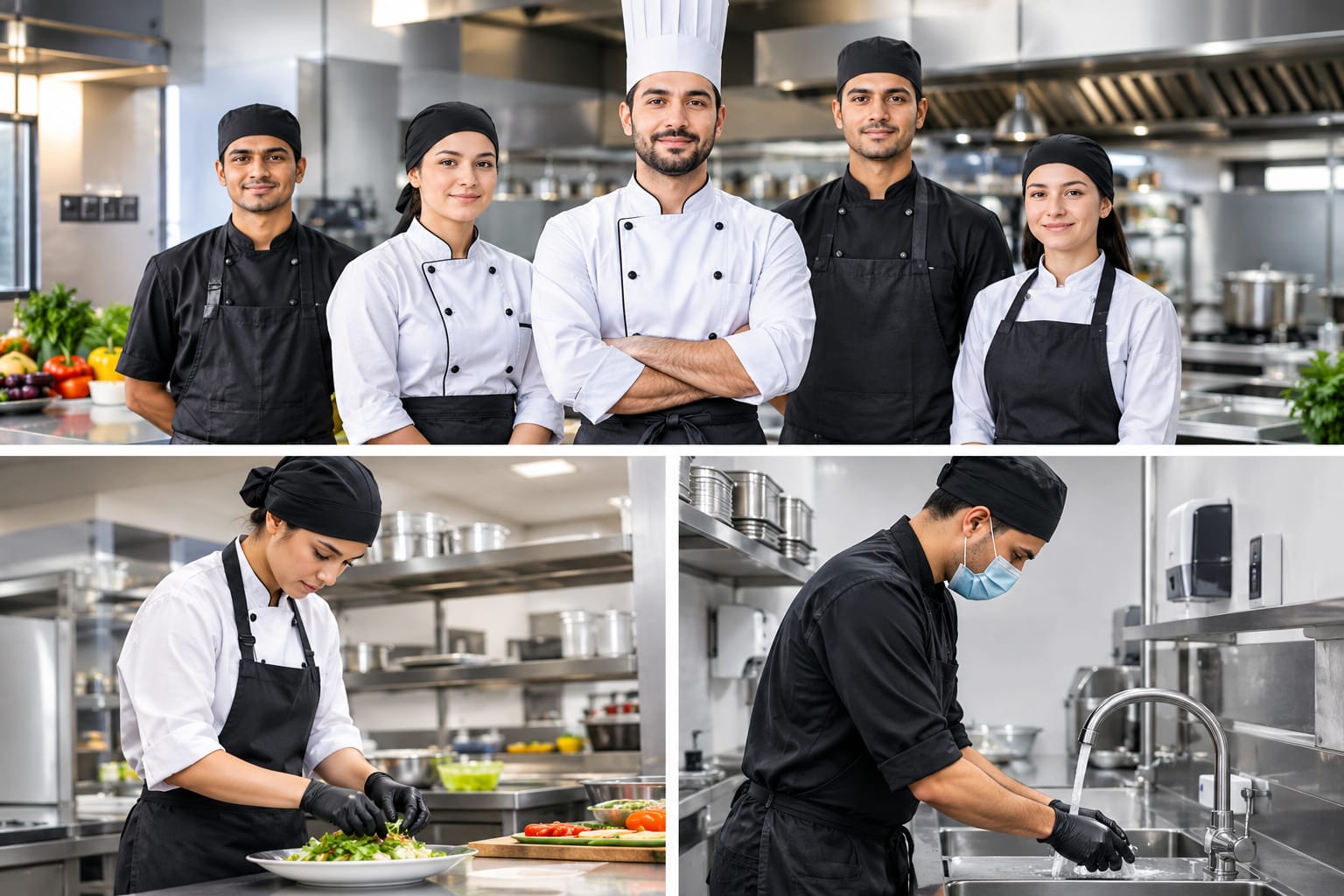
What should kitchen staff wear? A clean chef coat or tunic, kitchen trousers, an apron, a head cover, and closed, non-slip shoes, changed for a fresh set every shift. The details change with the job: a tandoor cook, a pastry chef, and a dishwasher face very different heat, mess and risk.
This guide explains the basic kitchen uniform, what each kitchen role should wear, the kitchen dress code that goes with it, and which fabrics are safest in a hot Pakistani kitchen.
What should kitchen staff wear? The basic uniform
Every person who works in a commercial kitchen needs five things. The first four are uniform; shoes come from a safety footwear supplier.
- Chef coat or tunic to protect the body from heat and splashes.
- Kitchen trousers in black, charcoal or check, which hide stains.
- Apron: a bib apron for cooks, a waterproof one for dishwashing.
- Head cover: a chef cap, skull cap, bandana or hair net.
- Closed, non-slip shoes for wet and greasy floors.
What each kitchen role should wear
The heat, mess and risk of each station decide the uniform. This table covers the roles in most restaurant and hotel kitchens.
| Role | What to wear | Why |
|---|---|---|
| Head chef | Executive chef coat, chef cap, trousers, apron | Marks who runs the kitchen |
| Line cook or sous chef | Chef coat, skull cap, bib apron, dark or check trousers | All-round protection at the pass |
| Tandoor, grill and BBQ cook | Short-sleeve, cotton-rich chef coat, heavy twill apron, skull cap | Intense radiant heat and open flame |
| Frying and sauté cook | Long-sleeve chef coat, bib apron | Long sleeves protect from oil splashes |
| Prep cook or kitchen helper | Tunic or T-shirt, bib apron, hair net or cap | Lighter work, lots of movement |
| Dishwasher | T-shirt, waterproof apron, cap | Constant water and detergent |
| Baker or pastry chef | Light chef coat or shirt, cap, apron | Flour and warm ovens |
A kitchen helper uniform can be simpler than a cook’s: a tunic or T-shirt in a dark colour, a bib apron and a hair net or cap is enough for prep and cleaning work.
Kitchen dress code and hygiene rules
A uniform only protects food if it is worn properly. These are the rules most well-run kitchens follow, and what food safety inspectors look for.
- A fresh uniform every shift, never yesterday’s coat.
- Change at work. Uniforms are not worn on the street or on the bus.
- Hair fully covered under a cap, skull cap, or net.
- No jewellery or watches at the cooking and prep stations.
- Aprons off before leaving the kitchen, eating, or using the washroom.
- Kitchen uniforms washed separately from cleaning cloths and mops.
- Replace torn or badly stained pieces straight away.
Safe fabrics for hot kitchens
Cotton-rich fabric is the safest choice near open flame, because polyester can melt onto the skin if it catches fire. A cook uniform for the tandoor or grill should be a cotton-rich drill or twill; keep poly-cotton blends for stations away from the flame.
- Near open flame: cotton-rich drill or twill.
- General cooking: 65/35 poly-cotton twill, which holds colour and is easy to wash.
- Very hot kitchens: coats with mesh vents under the arms.
- Aprons: heavy twill or canvas for the grill, waterproof coated fabric for dishwashing.
Our fabric guide for chef coats and restaurant uniforms compares blends and weights in more detail.
Colour coding the kitchen
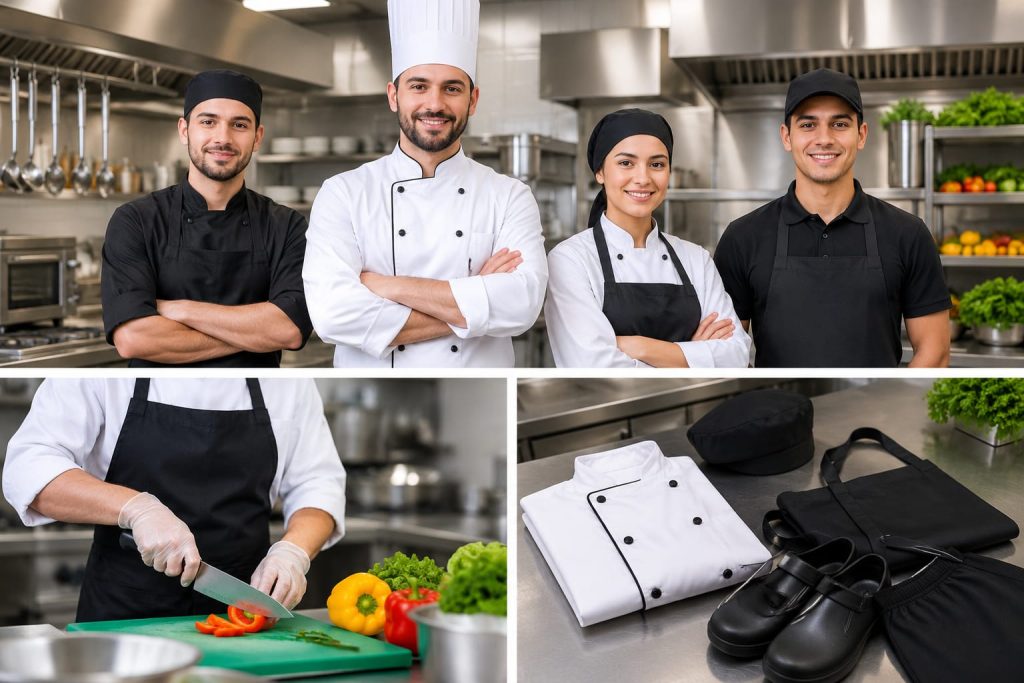
Colour coding helps a busy kitchen run smoothly, because anyone can see who does what at a glance. Here is one simple scheme you can adapt:
| Role | Example colour |
|---|---|
| Head chef | White coat |
| Cooks | Black or charcoal coats |
| Helpers and prep staff | Grey tunics |
| Dishwashers | Dark blue T-shirts with waterproof aprons |
How many sets does each cook need?
Plan on three to four chef coats and two to three aprons per cook, because kitchen uniforms get dirty faster than any other workwear. Dishwashers need at least two waterproof aprons each, so one can dry while the other is worn.
Ordering kitchen staff uniforms
As kitchen staff uniform manufacturers with our own factory in Rawalpindi, we make chef coats, aprons, caps, and helper tunics for hotels, restaurants, and caterers, with your logo embroidered in-house. Orders start from 30–50 sets, and you approve a sample before bulk production.
To dress the front of house to match, see our range of hotel and restaurant uniforms.
Setting up or upgrading a kitchen? Request a free bulk quote or WhatsApp +92 331 5050974 with your kitchen roles and staff numbers.
Frequently asked questions
What should kitchen staff wear?
Kitchen staff should wear a clean chef coat or tunic, kitchen trousers, an apron, a head cover such as a skull cap or hair net, and closed non-slip shoes, with a fresh set every shift.
Why do kitchen staff wear head covers?
Head covers keep hair out of food and sweat off the face. Food safety inspectors check for them, so a cap, skull cap, or hair net belongs in every kitchen uniform.
What fabric is safest near a tandoor or open flame?
Cotton-rich fabric is safest near open flame, because polyester can melt if it catches fire. Choose a cotton-rich drill or twill for tandoor and grill cooks.
Can kitchen uniforms be made with our logo?
Yes. Saad Enterprises makes chef coats, aprons, caps, and helper tunics with your logo embroidered, in matching colours. Orders start from 30–50 sets.


