
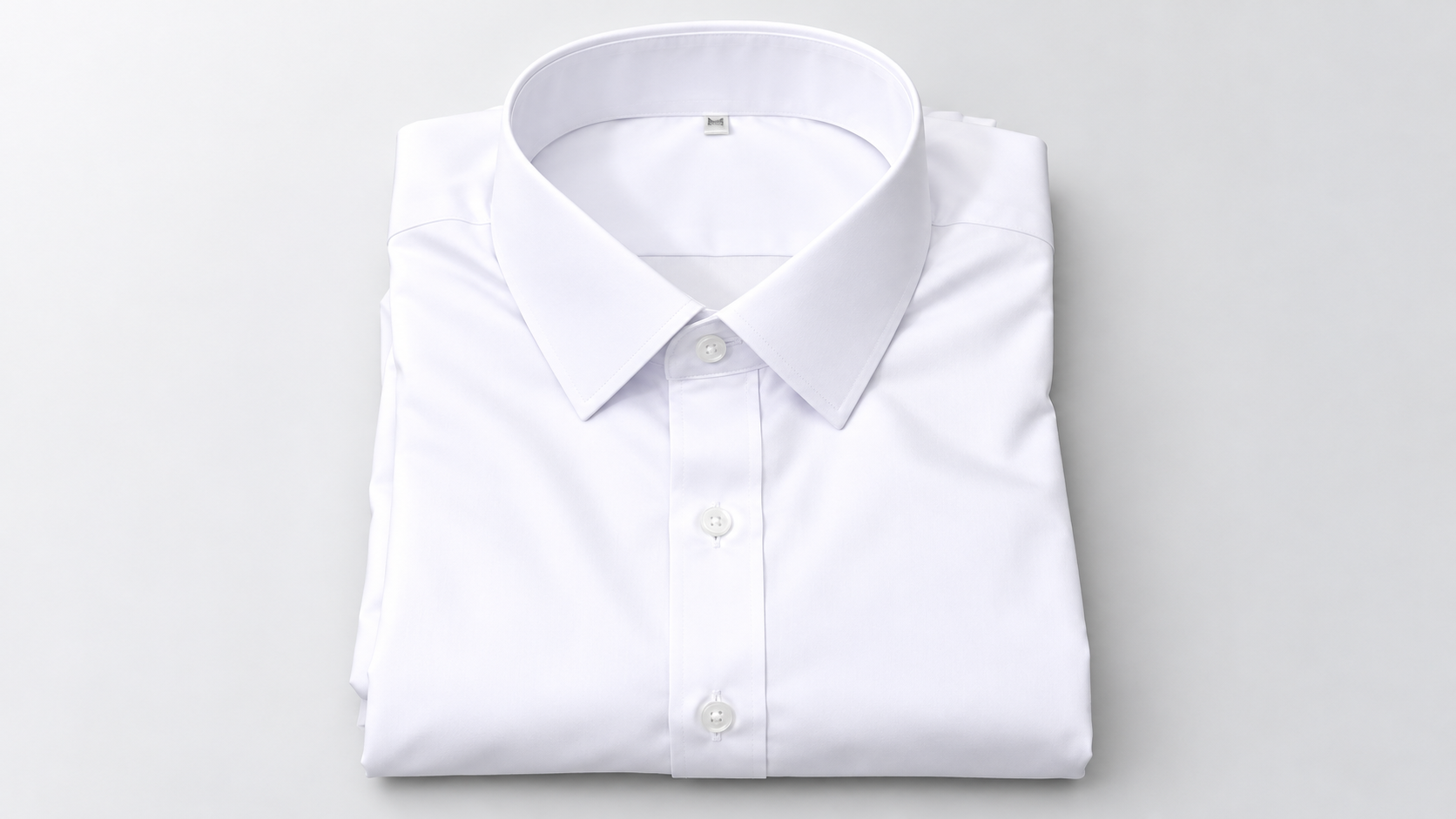
For most hospitals in Pakistan, the best fabric for medical scrubs is a 65/35 poly-cotton at 150–180 GSM. It survives hot hospital laundry, keeps its colour and costs less to replace. Where comfort matters most, for long shifts or doctors who want a modern fit, a poly-viscose stretch blend is the upgrade.
We make scrubs, lab coats and patient gowns for hospitals and clinics at our factory in Rawalpindi. This guide covers what procurement teams should compare before a bulk order: the fabric, how it handles laundry, which finishes are worth paying for, and how to set up colour coding.
Scrub fabrics compared
| Fabric | Feel | Survives hot washing | Best for | Typical weight |
|---|---|---|---|---|
| 65/35 poly-cotton | Smooth, slightly crisp | Very well: holds colour and shape | Wards, OPD, nursing staff, high-volume orders | 150–180 GSM |
| 100% cotton | Soft, very breathable | Poorly: shrinks and fades faster | Short-term use, staff with sensitive skin | 140–170 GSM |
| Poly-viscose with stretch (TRS) | Soft, drapes well, moves with you | Well, at moderate temperatures | Doctors, consultants, private hospitals | 170–200 GSM |
| 100% polyester microfibre | Smooth, quick-drying, can feel warm | Very well | Budget orders, support staff | 120–160 GSM |
In most cases, a hospital gets the best value from poly-cotton for most staff and a stretch blend for doctors. Both can be made in the same colour family.
The laundry test every scrub fabric must pass
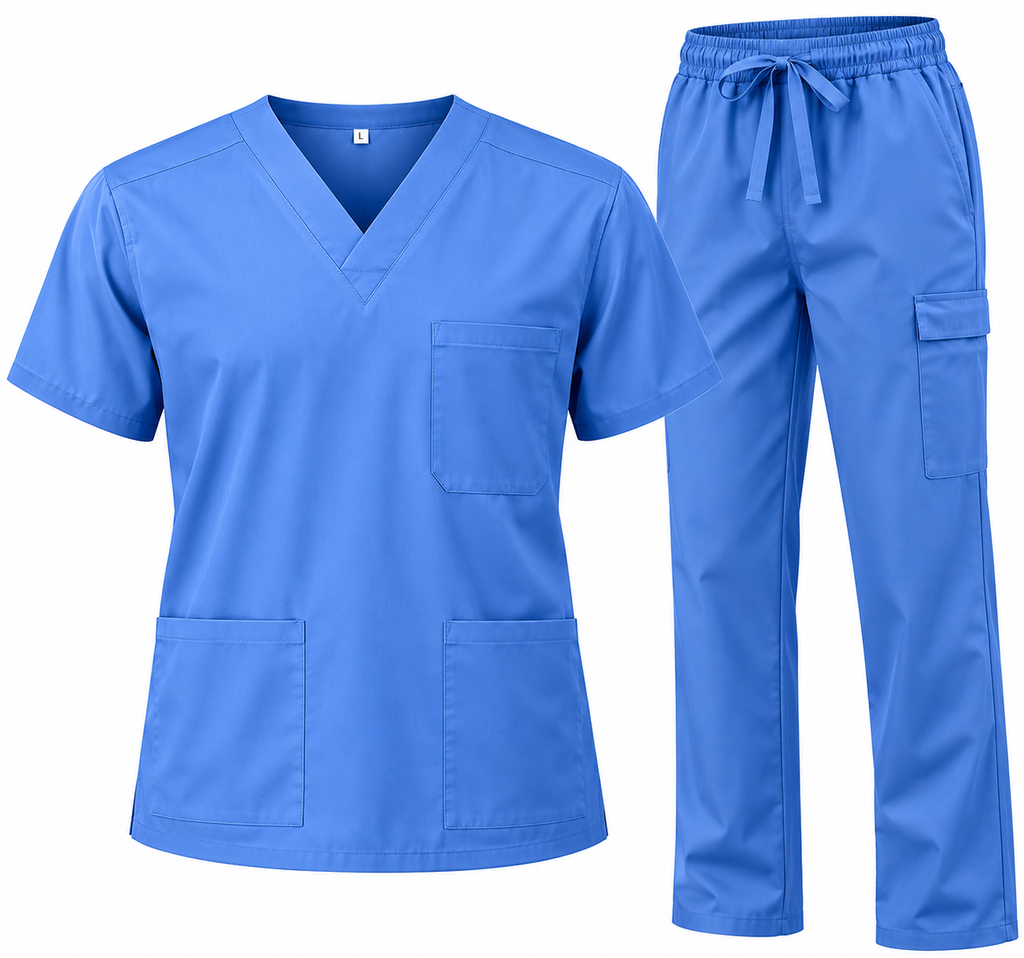
Hospital scrubs are washed far hotter and far more often than home clothes. UK hospital laundry guidance (HTM 01-04), which many hospitals follow, uses thermal disinfection at 65°C for 10 minutes or 71°C for 3 minutes. Cheap fabric shrinks, fades, or pills within weeks at those temperatures.
Before approving a bulk order:
- Ask for the colourfastness rating. Look for ISO 105-C06 (colourfastness to washing) at 4 or above.
- Wash a sample 20 times in your own laundry, then compare it with an unwashed piece for shade, shrinkage and pilling.
- Check the seams after washing. Puckered or split seams mean poor thread or stitching.
Antimicrobial and fluid-resistant finishes: what they actually do
These finishes are useful, but they’re often oversold.
- Antimicrobial finish (for example silver-ion treatments) reduces bacteria and odour building up on the fabric between washes. It does not prevent infections, and it doesn’t replace hand hygiene or protective gowns. The treatment also wears off over time, so ask how many washes it’s rated for.
- Fluid-resistant finish makes splashes bead and roll off instead of soaking in. That’s helpful in OPD and emergency. It isn’t a barrier against blood or body fluids, though. Where staff need real protection, use certified protective gowns. In the U,S these are rated under AAMI PB70, levels 1 to 4.
Our advice: pay for these finishes where staff are exposed to splashes, and stick with good poly-cotton everywhere else.
Colour coding by department
Colour coding helps patients see who they’re speaking to, and helps managers spot staff outside their area. There’s no national standard in Pakistan, so each hospital sets its own. Here’s a common starting point:
| Role | Common colour choice |
|---|---|
| Doctors and consultants | Navy, wine or charcoal |
| Nurses | Ceil blue, teal or white |
| Operation theatre | Green or royal blue |
| Lab and radiology | Grey or light blue |
| Housekeeping and support | Maroon, brown or grey |
Keep the scheme to four or five colours, so staff can tell them apart easily. Order every colour from the same fabric quality, so all departments wear and wash the same way. For cleaning and support teams, see our housekeeping uniforms.
Lab coats, OT suits and patient gowns
- Doctor lab coats: poly-cotton twill at 180–220 GSM, knee length, with three pockets and a pen slot. Choose buttons or snaps that survive hot washing.
- OT suits: a V-neck top and drawstring trousers in a cotton-rich or poly-cotton fabric. Plain styling with no loose trims, and a colour that’s different from ward scrubs.
- Patient gowns: soft poly-cotton with back ties, plus shoulder snaps for easy access to IV lines and monitoring. Order extra, because gowns go through the laundry fastest.
Sizing and branding for a mixed team
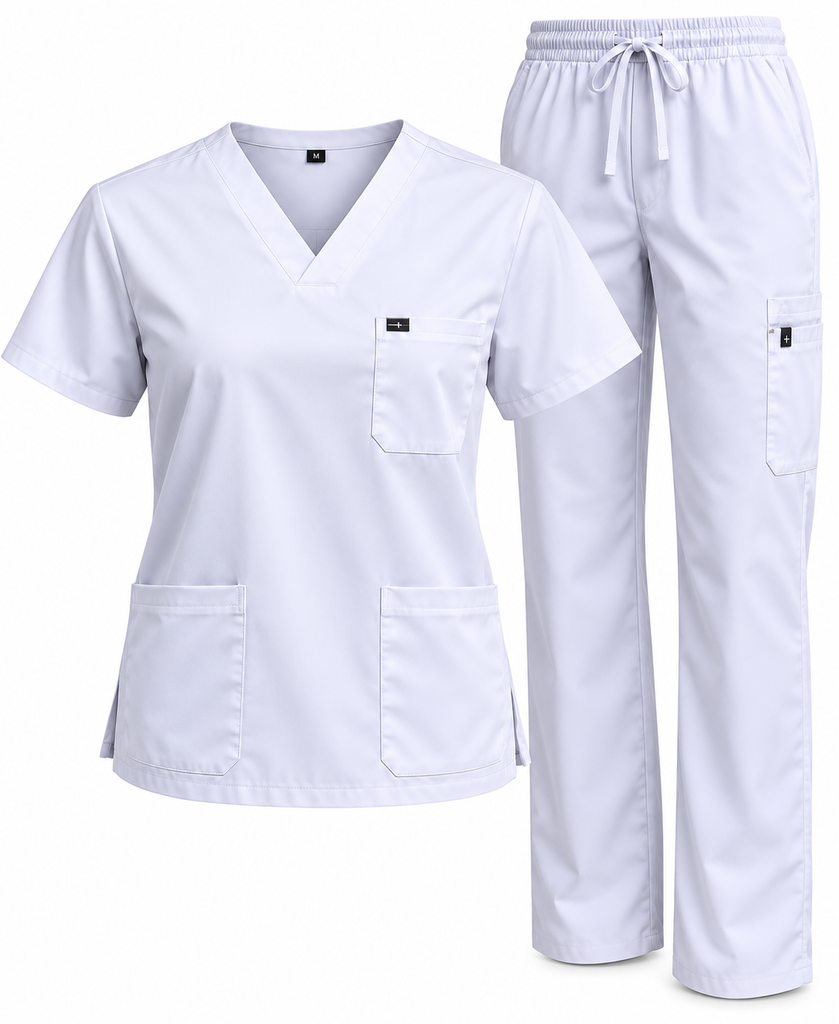
Hospital teams range from slim junior nurses to senior consultants, so one cut rarely fits everyone. Offer two fits, a straight unisex cut and a fitted cut, in sizes XS to 3XL. Ask your supplier for a size set, so staff can try on before you finalise the size breakdown.
Branding should be neat and wash-proof. Embroider the hospital logo on the left chest and the staff name or department above the pocket. Embroidery outlasts printing in hot washes. Keep the same logo size and position across every department.
Procurement checklist for hospital uniforms
- Fabric blend and GSM stated on the quote for each item
- Colourfastness rating checked (ISO 105-C06, 4 or above)
- Sample washed 20 times in your own laundry
- Colour scheme agreed for each department
- Antimicrobial or fluid-resistant finish only where it’s needed, with its wash rating
- Size set tried on and size breakdown confirmed
- Logo and name embroidery approved on a sample
- Re-order terms agreed, so new staff get the same shade
If you’re comparing suppliers, see how we work as hospital uniform manufacturers in Pakistan, or read about our uniform factory in Rawalpindi.
Frequently asked questions
What is the best fabric for medical scrubs in Pakistan’s climate?
A 65/35 poly-cotton at 150–180 GSM suits most hospitals. It stays comfortable in heat, survives hot laund,ry and keeps its colour. For doctors who want a softer, modern fit, choose a poly-viscose stretch blend.
Do antimicrobial scrubs prevent infections?
No. An antimicrobial finish reduces bacteria and odour on the fabric between washes, but it isn’t protective equipment. Hand hygiene, proper laundering, and certified gowns are still what protect staff and patients.
Can you embroider our hospital logo and staff names?
Yes. We embroider hospital logos, department names and staff names on scrubs and lab coats. A sample comes first for your approval, then every bulk piece is matched to it.
What is the minimum order for hospital uniforms?
At Saad Enterprises, bulk orders usually start from 30–50 sets per design. The exact minimum depends on the garment, fa,bric and branding, and we confirm it on your quote.
Get a free hospital uniform quote
Tell us the departments, the number of staff and the items you need: scrubs, lab coats, OT suits or patient gowns. We’ll send fabric swatches and a bulk price.
WhatsApp: +92 331 5050974 · Visit: our factory on IJP Road, opposite I-10, Rawalpindi · Or: use our contact page


