
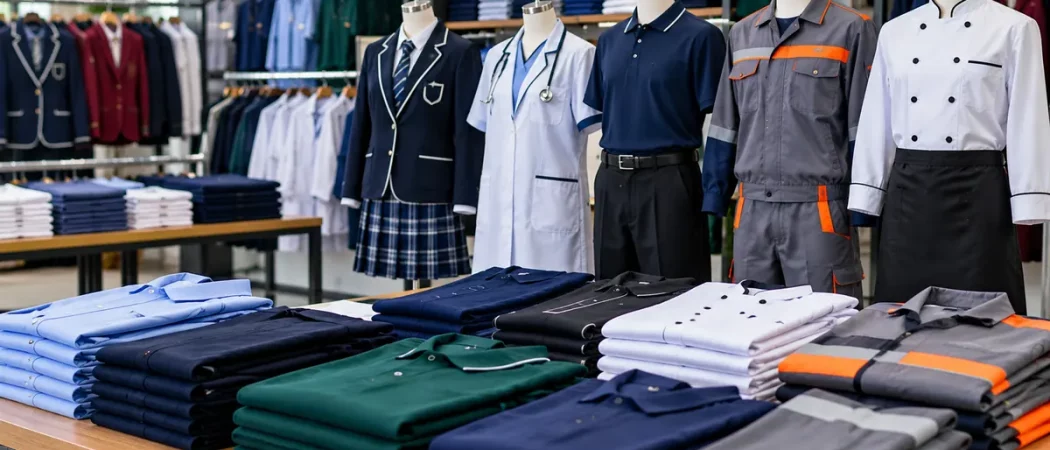
Premier Uniform Suppliers in Rawalpindi, Islamabad: B2B Procurement Guide
Sourcing uniforms for an organization across the Twin Cities involves more than comparing prices. Procurement managers need consistent fabric shades, accurate sizing, durable stitching, professional branding,g and dependable delivery schedules. A uniform that fades after a few washes, develops loose seams, ms or arrives after the required date can create additional costs and operational problems.
Choosing reliable uniform suppliers in Rawalpindi Islamabad gives businesses a practical way to coordinate sampling, customization and bulk procurement for employees, students, healthcare staff and industrial teams. However, buyers must evaluate fabric specifications, production capacity, quality-control procedures and delivery commitments before approving an order.
UniformSuppliers.com.pk provides a starting point for organizations seeking uniform supply solutions for Rawalpindi, Islamabad, and surrounding business districts. Whether your organization needs corporate polo shirts, school uniforms, medical scrubs, industrial workwear,r or hospitality apparel, a clearly defined procurement process helps ensure that the finished garments meet your requirements.
This guide explains how to evaluate suppliers, select suitable fabrics, compare customization methods, ds and organize bulk uniform orders. It also covers practical considerations for organizations operating in Islamabad’s commercial sectors, Rawalpindi’s established markets, and nearby industrial areas.
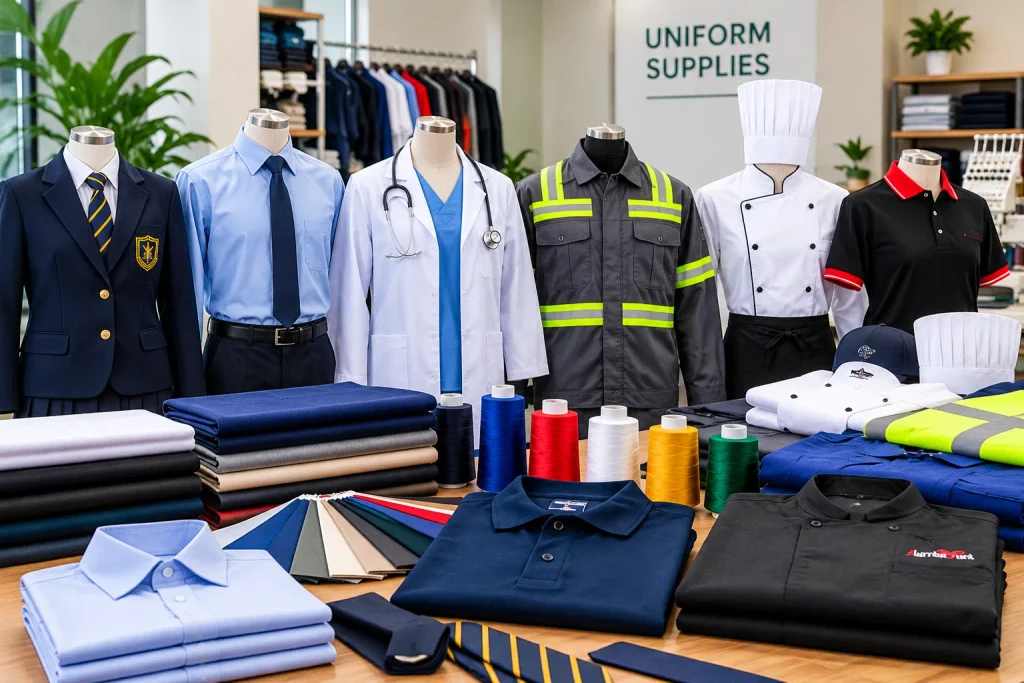
Why Sourcing Uniforms Locally in Rawalpindi & Islamabad Matters
Working with a supplier serving both cities can simplify communication and reduce the complexity of managing uniform orders across multiple offices, campuses, or operational sites.
1. Physical Fabric Sampling and Faster Decisions
Photographs cannot always communicate a fabric’s true texture, thickness, color,r or drape. Physical samples allow procurement teams to assess these characteristics before committing to a large order.
For example, a corporate office in Islamabad’s Blue Area may need formal shirts in a specific shade, while a school in Rawalpindi may require matching shirts, trousers, sweaters and blazers. Reviewing samples against the approved color and garment specifications helps reduce avoidable inconsistencies.
Before ordering, ask the supplier to confirm whether samples can be delivered to your office and whether sampling or transport charges apply.
2. Convenient Twin Cities Logistics
Organizations operating around the IJP Road corridor, Khayaban-e-Sir Syed, Saddar Rawalpindi, di and Islamabad’s commercial sectors may benefit from coordinating with a supplier familiar with both cities.
Potential delivery destinations include:
- Blue Area and the F-sector commercial areas of Islamabad.
- I-9 and I-10 industrial areas.
- Saddar, Raja Bazar and Khayaban-e-Sir Syed in Rawalpindi.
- Bahria Town and DHA Phase 1–5.
- Gulberg Greens and nearby business locations.
- Rawat Industrial Estate and the Kahuta Road corridor.
Delivery time depends on the actual dispatch location, production status, order quantity, and transport arrangements. Confirm the production schedule and delivery commitment in writing rather than assuming that a local supplier can always deliver within a fixed number of minutes.
3. Lower Coordination Costs for Repeat Orders
A local supply relationship can make repeat procurement easier when your organization needs additional sizes, replacement garments, or uniforms for new employees.
Maintain a record of the approved fabric, garment measurements, color reference, logo artwork,k and previous order quantities. These records help the supplier reproduce the agreed specifications more consistently.
For organizations with multiple branches, establish one master specification and a documented size breakdown for each delivery location.
4. More Transparent Bulk Procurement
The cheapest quotation does not necessarily represent the best value. A garment made with unsuitable fabric or poor stitching may need replacement earlier than expected.
When comparing wholesale uniform suppliers in Islamabad and Rawalpindi, evaluate:
- Fabric composition and weight.
- Stitching, seam construction, and finishing.
- Size consistency across the order.
- Embroidery or printing charges.
- Packaging and transport costs.
- Sampling arrangements and production timelines.
- Reorder availability and defect-resolution procedures.
Request itemized quotations based on equivalent specifications so your procurement team can compare suppliers fairly.
Wholesale Uniform Solutions for Every Sector in the Twin Cities
Different organizations require different garment designs, fabric constructions, and branding methods. The appropriate specification depends on the employee’s role, working environment, laundering conditions, and institutional requirements.
Corporate & IT Office Wear in Islamabad
Corporate and IT companies need professional clothing that supports their brand identity without compromising employee comfort.
Common requirements include:
- Branded polo shirts for technical and support teams.
- Formal button-down shirts and trousers.
- Corporate blazers and waistcoats.
- Jackets for field employees.
- Customized apparel for events and internal teams.
Cotton-polyester blends are frequently considered for everyday corporate shirts because they can balance comfort, durability, and ease of care. Poly-viscose fabrics may be suitable for formal trousers, waistcoats and blazers where a smoother finish and structured appearance are desired.
Corporate uniform suppliers serving Islamabad should confirm garment measurements, logo placement, color references and fabric specifications before production.
For companies with offices in Blue Area, I-9, I-10 or other commercial locations, request a quotation that clearly separates garment costs, branding charges and delivery costs.
Educational Institutions & School Networks
Schools and colleges need uniforms that remain consistent across classrooms, campuses and academic years. Their requirements often include several garment categories, seasonal options and a broad range of student sizes.
Common school uniform products include:
- Shirts, trousers and skirts.
- Blazers, sweaters and cardigans.
- School ties and accessories.
- Sports shirts and tracksuits.
- Customized uniforms with institutional logos.
Cotton-polyester fabrics, including suitable 65/35 and 80/20 blends, may be considered for everyday uniforms. The right choice depends on the required comfort, fabric weight, construction,n and maintenance expectations.
School uniform bulk suppliers in Rawalpindi should be able to work from an approved size chart and color reference. For large school networks, consider ordering representative samples for each garment category before authorizing full production.
A practical procurement checklist includes:
- Student size distribution.
- Separate summer and winter specifications.
- Approved logo and embroidery dimensions.
- Fabric composition and agreed GSM.
- Stitching and finishing requirements.
- Delivery dates aligned with the academic calendar.
Medical & Healthcare Facilities
Hospitals, clinics, diagnostic laboratories, es and healthcare centers may require different garments for doctors, nurses, laboratory technicians, reception staff, and support teams.
Common products include:
- Medical scrubs and scrub suits.
- Doctor lab coats.
- Nursing uniforms.
- Patient gowns.
- Laboratory and support-staff apparel.
Cotton-rich and cotton-polyester fabrics can be suitable for general healthcare clothing, depending on their construction, laundering requirements, and intended use. Buyers should assess comfort, colorfastness, shrinkage, seam performance and care instructions before choosing a material.
A hospital scrubs supplier serving Rawalpindi and Islamabad should be able to discuss pocket placement, garment fit, fabric weight, color requirements and sizing.
Healthcare buyers should also confirm that the selected fabric and garment construction meet the facility’s laundering and infection-control procedures.
Important: Antimicrobial and anti-fluid properties must not be assumed from a fabric’s appearance or fibre composition. Request appropriate product documentation or test evidence if these features are required. A garment should not be represented as medical-grade or protective merely because it is used in a healthcare facility.
Industrial Workwear & Safety Apparel in I-9, I-10 and Rawat
Industrial and construction organizations need workwear appropriate to their employees’ duties and workplace hazards. Garments may be exposed to abrasion, dust, repeated washing, and outdoor conditions.
Typical requirements include:
- Industrial shirts and cargo trousers.
- Utility jackets and workwear sets.
- Twill coveralls.
- High-visibility vests.
- Specialized protective garments for defined applications.
Twill fabrics are commonly considered for general industrial clothing because their woven construction can provide useful durability. Ripstop fabrics use a reinforced weave structure intended to help limit the spread of tears, although performance depends on the material, yarn,n and construction.
For safety workwear and coveralls serving I-9, I-10, Rawat Industrial Estate and nearby sites, define the application before selecting the fabric.
If the work requires flame-resistant garments, certified high-visibility clothing or other personal protective equipment, verify the applicable standard and request supporting documentation. Ordinary workwear must not be marketed as certified protective equipment without evidence.
Hospitality, Restaurants & Security Uniforms
Hotels, restaurants, catering businesses, housekeeping teams and security agencies need uniforms that are functional, easy to identify and consistent with their organization’s appearance.
Common requirements include:
- Chef coats, kitchen jackets and aprons.
- Waiter shirts, trousers and waistcoats.
- Housekeeping uniforms.
- Reception and front-desk apparel.
- Security guard uniforms, badges and selected accessories.
Polyester-cotton blends may work well for many everyday hospitality garments, while fabric selection for chef clothing should consider heat exposure, movement and laundering conditions.
Security uniforms may require specific colors, insignia, pockets and identification details. Buyers should confirm all design and branding requirements before production, particularly where uniforms are subject to organizational or regulatory specifications.
Fabric Selection & Stitching Standards
Fabric composition, weight, ht and construction directly affect garment comfort, appearance, durability, and maintenance. No single fabric is suitable for every uniform category, so buyers should compare actual specifications rather than relying on broad descriptions such as premium quality.
Uniform Fabric Comparison Table
| Fabric or construction | Illustrative GSM range | Main characteristics | Typical application |
|---|---|---|---|
| Lightweight cotton | 110–160 GSM | Breathable, comfortable, varies with weave and finish | Shirts and lightweight uniforms |
| Cotton-polyester blend | 120–200 GSM | Balances comfort, dimensional stability and ease of care | School and office shirts |
| CVC cotton-rich blend | 140–220 GSM | Higher cotton proportion in a blended fabric | Shirts and selected everyday uniforms |
| Poly-viscose | 180–280 GSM | Smooth finish and structured drape, depending on construction | Formal trousers, blazers and waistcoats |
| Cotton or polyester-cotton twill | 200–300 GSM | Diagonal weave, suitable for many workwear applications | Work trousers, jackets and general coveralls |
| Suitable ripstop fabric | 150–260 GSM | Reinforced weave intended to help limit tear propagation | Selected utility clothing and workwear |
| Healthcare uniform fabric | 150–220 GSM | Depends on fibre composition, finish and laundering needs | Scrubs and lab coats |
These are indicative purchasing ranges, not universal industry standards. The appropriate GSM depends on the garment, yarn quality, weave, climate and required performance.
Understanding Cotton-Polyester Blends
A 65/35 cotton-polyester blend typically contains 65% cotton and 35% polyester by fibre composition. An 80/20 blend contains 80% cotton and 20% polyester.
65/35 cotton-polyester may suit organizations looking for a balance of comfort, durability and easy maintenance.
80/20 cotton-polyester provides a higher cotton proportion and may be preferred where cotton-rich comfort is important.
The blend ratio alone does not establish fabric quality. Weave, yarn construction, dyeing, finishing,g and laundering all influence the finished garment’s performance.
What Is GSM, and Why Does It Matter?
GSM means grams per square metre. It measures fabric mass per unit area and helps buyers compare the weight of fabrics.
A higher GSM may indicate a heavier material, but it does not automatically mean better quality. A lightweight, well-constructed shirt fabric may be more suitable for an office employee than a heavy workwear fabric.
When requesting a quotation, specify the required GSM and an acceptable tolerance where known. Ask the supplier to identify the actual fabric being quoted and whether the specification applies to the base fabric or a finished material.
Stitching Quality and Thread Selection
Fabric quality is only one part of garment performance. Poor seam construction, inconsistent measurements, ts and weak finishing can shorten a uniform’s useful life.
During sample approval, inspect:
- Seam alignment and stitch consistency.
- Reinforcement at pockets and other stress points.
- Collar, cuff, and hem construction.
- Button attachment and zipper operation.
- Thread consistency and loose ends.
- Garment measurements against the approved size chart.
Stitches per inch, often abbreviated as SPI, can be included in a technical specification when appropriate. The required stitch density varies with fabric weight, seam type, and garment design; a single SPI value should not be treated as suitable for every uniform.
For larger orders, define acceptable measurements, inspection criteria and defect-handling procedures before production starts.
In-House Customization: Computerized Embroidery & Digital Printing
Custom branding helps organizations maintain a recognizable appearance across departments, branches and teams. The most suitable method depends on the artwork, fabric, quantity, budget,t and expected washing conditions.
Computerized Embroidery and Logo Digitizing
Computerized embroidery stitches a logo directly onto a garment using thread. The artwork must first be converted into a machine-readable embroidery file through a process known as digitizing.
Embroidery is commonly considered for:
- Corporate polos and shirts.
- School blazers and selected sweaters.
- Medical coats and suitable scrubs.
- Hospitality apparel and work jackets.
The quality of the result depends on digitizing, stitch density, thread selection, logo size, ze and fabric stability. Very small text or highly detailed artwork may need simplification.
Before approving bulk production, request a representative embroidery sample or sew-out. Confirm the logo dimensions, placement, thread colors, and any backing or reinforcement requirements.
Screen Printing for Bulk Uniforms
Screen printing is often considered for larger quantities of shirts and other garments featuring consistent artwork.
It can suit:
- Promotional T-shirts.
- School sportswear.
- Event uniforms.
- Corporate apparel.
Setup costs and the number of print colors can affect the economics of screen printing. Ask for a sample and confirm the recommended washing and care instructions.
DTF Printing for Detailed Logos
Direct-to-Film (DTF) printing transfers printed artwork from a film onto a compatible garment using suitable adhesive and heat application.
It can be useful for multicolor logos, detailed designs, and smaller production runs. Print durability depends on the transfer materials, application settings, garment surface,e and laundering conditions.
For uniforms exposed to frequent washing, request a sample and evaluate the printing method against the intended use.
Sublimation and Vinyl Applications
Sublimation is commonly used for polyester-rich or compatible coated materials, particularly sportswear. It is generally unsuitable for standard untreated cotton garments without a compatible system.
Heat-applied vinyl can work for certain names, numbers, rs and simple designs, although suitability depends on the material, design, and required durability.
How to Choose a Branding Method
| Method | Suitable use | Key consideration |
|---|---|---|
| Computerized embroidery | Corporate logos, coats and polos | Detail, stitch density and fabric stability |
| Screen printing | Bulk shirts and repeat graphics | Setup, color count and order quantity |
| DTF printing | Detailed multicolor designs | Transfer quality and washing performance |
| Sublimation | Compatible synthetic sportswear | Fabric compatibility and color requirements |
| Heat-applied vinyl | Selected names, numbers and simple graphics | Material compatibility and adhesion |
For custom logo embroidery and printing suppliers across the Twin Cities, provide the original logo file, desired dimensions, garment type,e and branding colors. Approve a sample before authorizing the complete order.
A Simple Four-Step Order Process for B2B Clients
A clear procurement process helps organizations control quality, reduce misunderstandings, gs and coordinate delivery dates.
Step 1: Consultation and Requirements
Share the garment category, estimated quantity, target delivery date, size breakdown, and intended use.
If your organization has a previous sample, technical specification, or brand guideline, provide it at the beginning. This helps the supplier understand the requirements and prepare a more relevant quotation.
Step 2: Fabric and Sample Approval
Review available fabric options and request samples where offered. Check composition, weight, color, fit, seam construction,n and logo placement.
For large institutional orders, document the approved sample and retain the specification as the reference for production.
Step 3: Bulk Production and Quality Inspection
Before manufacturing begins, confirm the final quantity, size breakdown, fabric, design, branding, delivery schedule, and agreed quality criteria.
Inspection should cover garment measurements, stitching, finishing, color consistency, branding,g and quantity. Agree on how defects or deviations will be handled before production starts.
Step 4: Packaging and Twin Cities Delivery
After the order passes the agreed inspection, garments can be counted, sorted, ed and packaged according to the procurement requirements.
For deliveries to Islamabad, Rawalpindi, I-9, I-10, Blue Area, Bahria Town or Rawat, provide the complete address and confirm transport arrangements, delivery charges and expected arrival date.
For multi-branch organizations, specify whether garments should be separated by department, branch, employee, year,e or size.
Frequently Asked Questions
1. How quickly can you deliver bulk uniform orders within Rawalpindi and Islamabad?
Delivery depends on the order quantity, fabric availability, design complexity, sample approval, and current production schedule. Local transport time is only one part of the process; manufacturing and customization may take longer. Request a written schedule that identifies the expected production completion and dispatch dates before confirming your order.
2. What is your minimum order quantity for corporate polo shirts?
The minimum order quantity depends on the supplier, garment specifications, fabric availability, and branding method. Embroidery and printing may have different setup or minimum requirements. Contact UniformSuppliers.com.pk with your estimated quantity, preferred fabric,c and logo requirements to confirm the applicable MOQ.
3. Can you send a sales representative with fabric samples to our office in Islamabad or Rawalpindi?
Ask UniformSuppliers.com.pk to confirm whether office visits or physical sample delivery are available for your location. Provide your office address, preferred appointment time, and product category. Also confirm whether any sample or transport charges apply before arranging the visit.
4. Do you offer custom logo embroidery and DTF printing?
Computerized embroidery and DTF printing are common options for branded garments, but availability should be confirmed for the specific product and order. Share your logo artwork, garment type, quantity, and washing requirements so the appropriate branding method can be evaluated.
5. Which fabric is best for uniforms in Islamabad and Rawalpindi?
The right fabric depends on the garment, working environment, and maintenance requirements. Cotton-polyester blends may suit everyday shirts, poly-viscose can be considered for formal apparel, and suitable twill fabrics are often used for general industrial workwear. Compare the actual fabric composition, GSM, weave,e and care instructions before making a selection.
6. How can we compare wholesale uniform prices fairly?
Request itemized quotations based on the same garment design, fabric composition, GSM, size distribution, branding method, order quantity, packaging, ng and delivery terms. Include sampling charges and any applicable taxes. Comparing equivalent specifications gives procurement teams a more reliable basis for evaluating the total cost.
7. Can one uniform order cover multiple branches or departments?
A multi-location order may be possible depending on the supplier’s capabilities and logistics. Prepare a consolidated order showing the quantity, size breakdown, garment type, and delivery address for each location. Confirm packaging, labelling, and dispatch arrangements before production is finalized.
Partner with Uniform Suppliers in Rawalpindi Islamabad
Choosing dependable uniform suppliers in Rawalpindi Islamabad requires more than finding the lowest unit price. Procurement teams should evaluate fabric specifications, stitching, branding quality, sampling arrangements, production controls, and delivery commitments together.
For schools, hospitals, corporate offices, hotels, security agencies and industrial organizations, a well-documented uniform specification helps maintain consistency across employees and locations. Approving samples, recording garment measurements,s and agreeing on inspection criteria before bulk production can also reduce avoidable procurement problems.
UniformSuppliers.com.pk is a starting point for organizations seeking customized uniforms and bulk supply solutions for the Twin Cities. Share your garment requirements, estimated quantity, preferred material, branding needs, and delivery location to discuss a suitable quotation.
Request a uniform quotation today and take the next step toward a consistent, professionally branded uniform program for your organization.


